

Patients often search online before choosing a doctor, clinic, or healthcare provider. They compare services, read reviews, check office locations, and look for clear answers. Therefore, a strong online presence can help healthcare practices connect with people who need their services.
However, appearing in search results takes more than adding keywords to a website. Healthcare websites need accurate information, helpful content, and a trustworthy online experience. Effective expert Medical SEO brings these elements together to improve visibility and support patient discovery.
Florida’s healthcare market includes independent practices, specialty clinics, hospitals, and other providers. Each organization needs a strategy that reflects its services and local audience. MediRank helps healthcare businesses understand how search optimization supports their online presence. A thoughtful approach can improve website structure, local visibility, and the quality of information patients find. Most importantly, healthcare marketing should put accuracy, privacy, and patient needs first.
Why Medical SEO Matters for Florida Healthcare Providers
Healthcare decisions often begin with a local search. Someone may look for a family doctor nearby, a specialist in their city, or a clinic offering a particular service. If a practice has limited online visibility, potential patients may struggle to find its information.
Medical SEO helps organize a website so search engines and visitors can understand its services. It also supports visibility for relevant searches across Florida communities. For example, a dental practice in Tampa may target local searches related to its treatments and service area.
Connecting Search Visibility With Patient Needs
Reliable Medical SEO focuses on relevant searches rather than traffic alone. The goal is to attract visitors who are looking for services the practice actually provides.
Important benefits include:
- Better visibility for relevant healthcare searches.
- Clearer service information for potential patients.
- Improved local search presence.
- Easier navigation across website pages.
- More opportunities for patients to contact the practice.
However, rankings cannot guarantee appointments or patient growth. Website quality, reputation, location, and patient demand also matter. Therefore, practices should measure meaningful results, such as qualified inquiries and appointment requests.
Building a Strong Healthcare SEO Strategy
A successful healthcare SEO strategy begins with research. Providers need to understand what patients search for and how those searches relate to available services. This includes reviewing service pages, website structure, competitors, and local search terms.
Furthermore, healthcare websites should explain medical topics responsibly. Content must avoid exaggerated claims and unsupported treatment promises. Accurate information helps readers make informed decisions and supports trust.
How Expert Medical SEO Improves Website Visibility
Professional Medical SEO connects technical improvements with useful content. A clear website structure helps visitors find the information they need. It also helps search engines understand the relationship between different pages.
A practical strategy should include:
- Researching relevant services and patient search terms.
- Creating dedicated pages for important treatments.
- Improving page titles and meta descriptions.
- Organizing content with clear headings.
- Reviewing website speed and mobile usability.
Additionally, practices should keep provider biographies and credentials accurate. Explain qualifications clearly and identify who reviews medical content when appropriate.
Search performance also needs regular monitoring. Therefore, review rankings, organic traffic, conversions, and page engagement over time. These measurements help identify areas that need improvement.
Local SEO for Clinics, Doctors, and Medical Practices
Local SEO helps healthcare providers appear when people search for nearby services. It is especially useful for practices that depend on patients within a defined service area. Accurate business information also makes it easier for visitors to contact or locate a clinic.
A complete Google Business Profile can support this process. It should include the correct practice name, address, phone number, website, hours, and relevant categories. However, every detail must match the business’s actual operations.
Strengthening Local Search Presence
The Best Medical SEO Services should include practical local optimization. For example, a clinic may create useful pages for its specialties and the communities it serves. These pages should offer real information instead of repeating city names.
Focus on these five actions:
- Keep business details accurate across online directories.
- Complete relevant Google Business Profile information.
- Create useful pages for major medical services.
- Encourage honest patient reviews without pressure.
- Monitor local search visibility and patient inquiries.
Moreover, practices should respond to reviews professionally. Avoid sharing private patient details in public replies. Likewise, follow applicable privacy rules when handling patient feedback.
Local content should reflect genuine service areas. A clinic should not claim to operate in locations where it has no legitimate presence. Clear information helps patients understand where they can receive care.
Creating Trustworthy Medical Content
Healthcare content carries a greater responsibility than many other industries. Readers may use it to understand symptoms, treatments, and care options. Consequently, accuracy and clarity should guide every content decision.
Useful pages answer common questions without replacing professional medical advice. They should explain services, describe general treatment processes, and help patients understand when to contact a qualified provider.
Applying Experience and Expertise to Website Content
A Top Medical SEO Expert understands that healthcare content needs careful review. Medical professionals should check clinical details before publication. Writers should also use clear language and avoid claims that promise specific outcomes.
Consider these content practices:
- Include accurate provider credentials and qualifications.
- Explain treatments in plain, understandable language.
- Review medical information regularly for accuracy.
- Cite reliable sources when discussing health topics.
- Make appointments and contact information easy to find.
Furthermore, practices should review their privacy policies and website forms. Collect only the information needed for a clear purpose. Use appropriate safeguards when handling sensitive patient details.
MediRank can help healthcare businesses consider content structure and search visibility together. However, clinical accuracy must remain the responsibility of qualified healthcare professionals. Trust grows when websites communicate honestly and clearly.
Measuring Results and Maintaining SEO Performance
SEO requires consistent attention. Search behavior changes, competitors update their websites, and search engines adjust their systems. Therefore, healthcare providers should review performance instead of treating optimization as a one-time task.
Useful measurements include organic visits, search impressions, phone calls, contact form submissions, and appointment requests. These indicators show whether website improvements support business goals.
Five Ways to Maintain Long-Term Progress
A structured review process helps practices identify what works and what needs attention.
- Check important keyword rankings and search visibility.
- Review website traffic and relevant conversion actions.
- Update outdated service and provider information.
- Fix broken links and technical website errors.
- Improve pages using search data and patient questions.
Additionally, practices should review their competitors periodically. This can reveal content gaps and opportunities to explain services more clearly.
An Affordable Medical SEO Company should explain its work and reporting process. Ask which tasks it will complete, how it measures progress, and what results it can reasonably track. Avoid providers that promise guaranteed rankings.
SEO results usually take time. However, consistent improvements can strengthen a website’s usefulness and search presence. A long-term plan should balance technical health, local relevance, accurate content, and patient experience.
Conclusion
Healthcare providers need an online presence that helps patients find accurate information and understand available services. Strong website content, local listings, technical performance, and trustworthy provider details all contribute to that experience.
Florida practices should begin by reviewing their current websites. Check service pages, contact details, mobile usability, and local search visibility. Furthermore, make sure medical content reflects current information and receives appropriate professional review.
Choosing professional Medical SEO agency support in Florida can help practices organize these efforts into a clear strategy. Look for a provider that explains its process, shares useful reports, and respects healthcare privacy requirements. Avoid promises of instant rankings or guaranteed patient numbers. Instead, focus on steady improvements that support relevant visibility and better website experiences. With consistent attention, healthcare organizations can make it easier for local patients to discover their services and take the next step toward care.
FAQs
What is Medical SEO?
Medical SEO improves a healthcare website’s visibility in search engines through useful content, technical improvements, and local search optimization.
Why do healthcare providers in Florida need local SEO?
Local SEO helps patients find nearby doctors, clinics, and healthcare services when they search for care in their communities.
How long does Medical SEO take to show results?
Results vary by competition, website condition, and strategy. Meaningful improvements often require consistent work over several months.
Does Medical SEO include Google Business Profile optimization?
Yes. Local SEO often includes accurate business information, relevant categories, service details, and professional review management.
Can SEO guarantee more patients for a medical practice?
No. SEO can improve visibility and attract relevant website visitors, but appointments also depend on patient needs, reputation, location, and other factors.
Ready to attract more patients?
Book a free 20-minute site audit. We'll show you exactly why competitors outrank you and the specific steps to fix it.
Related articles

Medical SEO in Texas | Strengthen Your Online Presence & Grow Your Practice
Patients across Texas often search online before choosing a healthcare provider. They compare services, check office locations, read reviews, and […]

Medical SEO & AI Search Optimization: How Private Practices Attract More Qualified Patients
Patient discovery has fundamentally shifted. Whether someone is looking for a cosmetic dentist, a regenerative medicine clinic, or an aesthetic […]
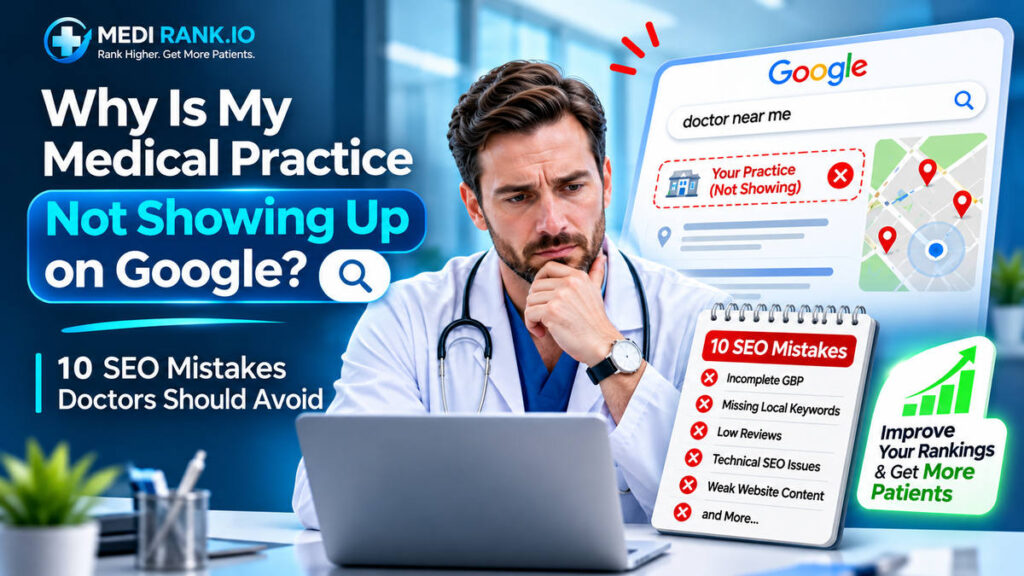
Why Is My Medical Practice Not Showing Up on Google? 10 SEO Mistakes
Is your medical practice missing from Google Search or Maps? Discover 10 common medical SEO mistakes and learn how to improve your clinic’s visibility and attract more patients.